The Energy Unit Mess — And How to Actually Feel a Joule
May 17, 2026 · 7 min read · Energy Literacy
Your morning coffee is about 100 kcal. Climbing ten flights of stairs is roughly the same mechanical work. Except your body runs at about 25% efficiency, so you actually burn three to four coffees getting to the top — and the other three leave as heat.
Welcome to the energy unit mess.
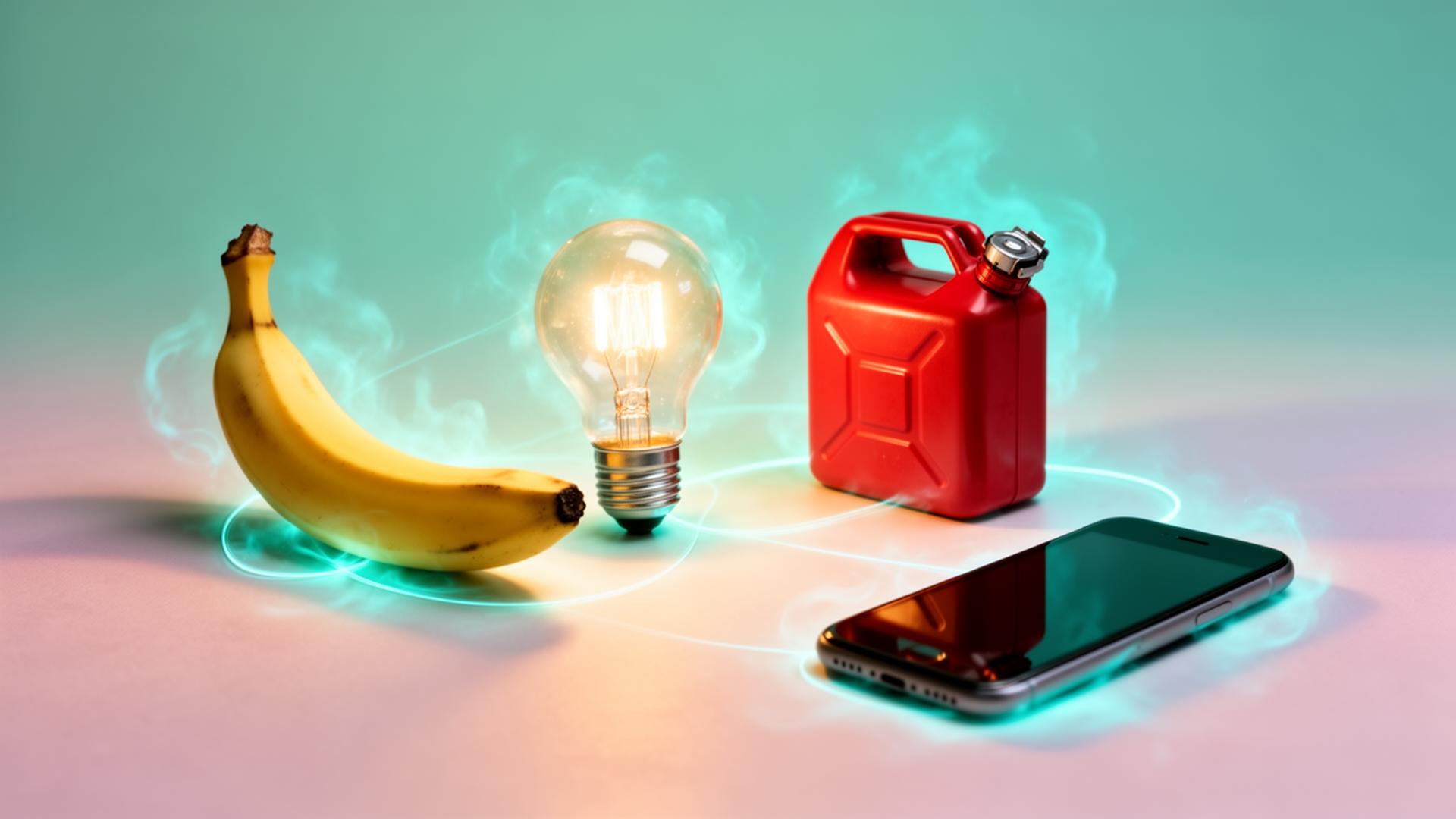
The mess
Walk through a normal day and count the units you bump into:
- Your breakfast label says kilocalories (kcal).
- Your electricity bill says kilowatt-hours (kWh).
- Your physics textbook says joules (J).
- Your air conditioner brochure says BTU.
- Your natural-gas bill says therms.
- Your fitness watch says calories burned (lowercase, and yes, that's actually kilocalories too — don't ask).
Five vocabularies, one physical quantity. The result is that almost nobody — including engineers — has a real feel for energy. We treat the kitchen, the wall outlet, and the gas pump as if they were unrelated universes.
They are not. They are the same currency, denominated in different bills.
One ruler: the joule
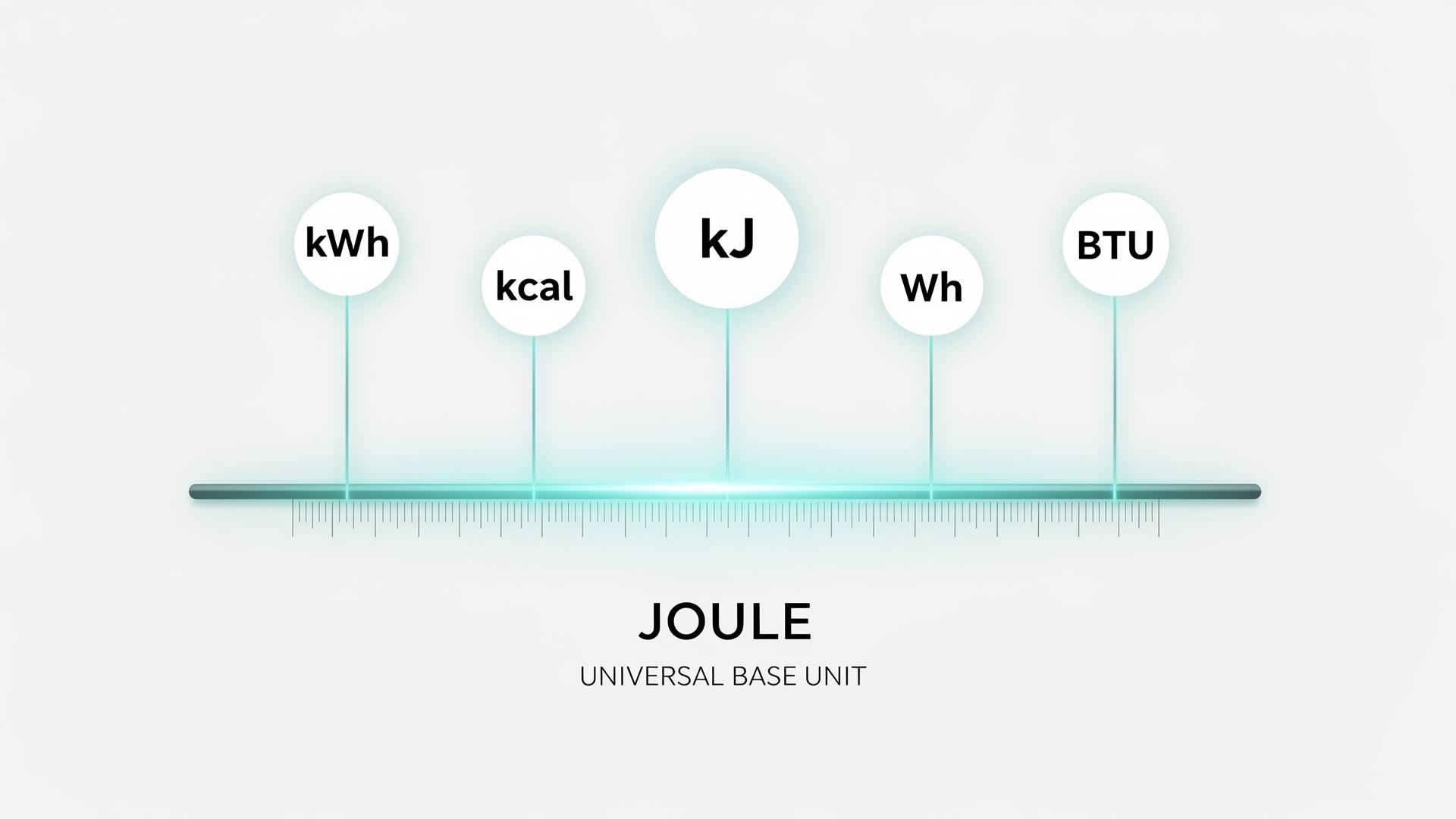
Physicists settled this a long time ago. The universal unit of energy is the joule. Everything else is just a multiplier:
- 1 kilojoule (kJ) = 1,000 J
- 1 calorie (cal) = 4.184 J
- 1 kilocalorie (kcal) = 4,184 J
- 1 watt-hour (Wh) = 3,600 J
- 1 kilowatt-hour (kWh) = 3,600,000 J ≈ 860 kcal
- 1 BTU ≈ 1,055 J
That second-to-last line is the punchline of the entire post:
1 kWh ≈ 860 kcal.
Your electricity bill and your dinner plate are measured on the same ruler. You just never saw them next to each other.
One quick warning: power is not energy. Watts are speed; joules are distance. A 2,000 W kettle running for 5 minutes and a 10 W LED running for 17 hours burn the exact same energy. Get this one distinction right and half the headlines about "huge power plants" suddenly make more sense.
The Energy Rosetta Stone
Memorize half a dozen of these and you can translate almost anything you encounter:
- Lifting a 1 kg book up by 1 m — ~10 J — a flick of the wrist.
- Charging a smartphone once — ~15 Wh ≈ 54,000 J — a single grape.
- 1 banana — 105 kcal ≈ 0.12 kWh — 30 minutes of brisk walking.
- Boiling 1 L of water — ~0.093 kWh ≈ 80 kcal — a small cookie.
- 1 Big Mac — 563 kcal ≈ 0.65 kWh — charging your phone ~150 times.
- 1 kWh of electricity — 3.6 MJ ≈ 860 kcal — boiling ~10 L of water, or about half your daily calorie budget.
- Daily adult food intake — ~2,000 kcal ≈ 2.3 kWh — your body's idle subscription fee.
- 1 L of gasoline — ~9.7 kWh ≈ 8,300 kcal — roughly a full day of human food, in a cup.
- A marathon — ~2,800 kcal ≈ 3.3 kWh — about 8 hours of running your fridge.
The currency analogy
If the joule is the unit, here is the wallet:
- A joule is a penny — almost too small to notice on its own.
- A kilocalorie is a meal — what you spend in one sitting.
- A kilowatt-hour is a dollar bill — the everyday unit of your electricity budget.
- A litre of gasoline is a small stack of cash — preposterously dense.
- A tank of gas or a home battery is your account balance.
You wouldn't run a business without knowing the difference between cents, dollars and account balances. Energy is no different — and the moment you can see the conversion, the whole economy of your life gets visible.
Now actually feel it
Conversion tables are forgettable. Visual comparison sticks. That is exactly what the free tool on Master Energy is built for.
Type a number, pick a unit, and see your value plotted on a horizontal bar chart next to a curated set of everyday energies:
- 🍌 1 banana — ~105 kcal
- 📱 Charging a phone once — ~0.015 kWh
- 🫖 Boiling 1 L of water — ~0.093 kWh
- 🚗 1 km in an EV — ~0.18 kWh
- 🍔 1 Big Mac — ~563 kcal
- 🏠 Daily home electricity (avg) — ~10 kWh
- ⛽ 1 L of gasoline — ~9.7 kWh
- 🍽️ Daily adult food intake — ~2000 kcal
A linear/log toggle lets a snack and a fuel tank sit on the same chart without one of them disappearing.
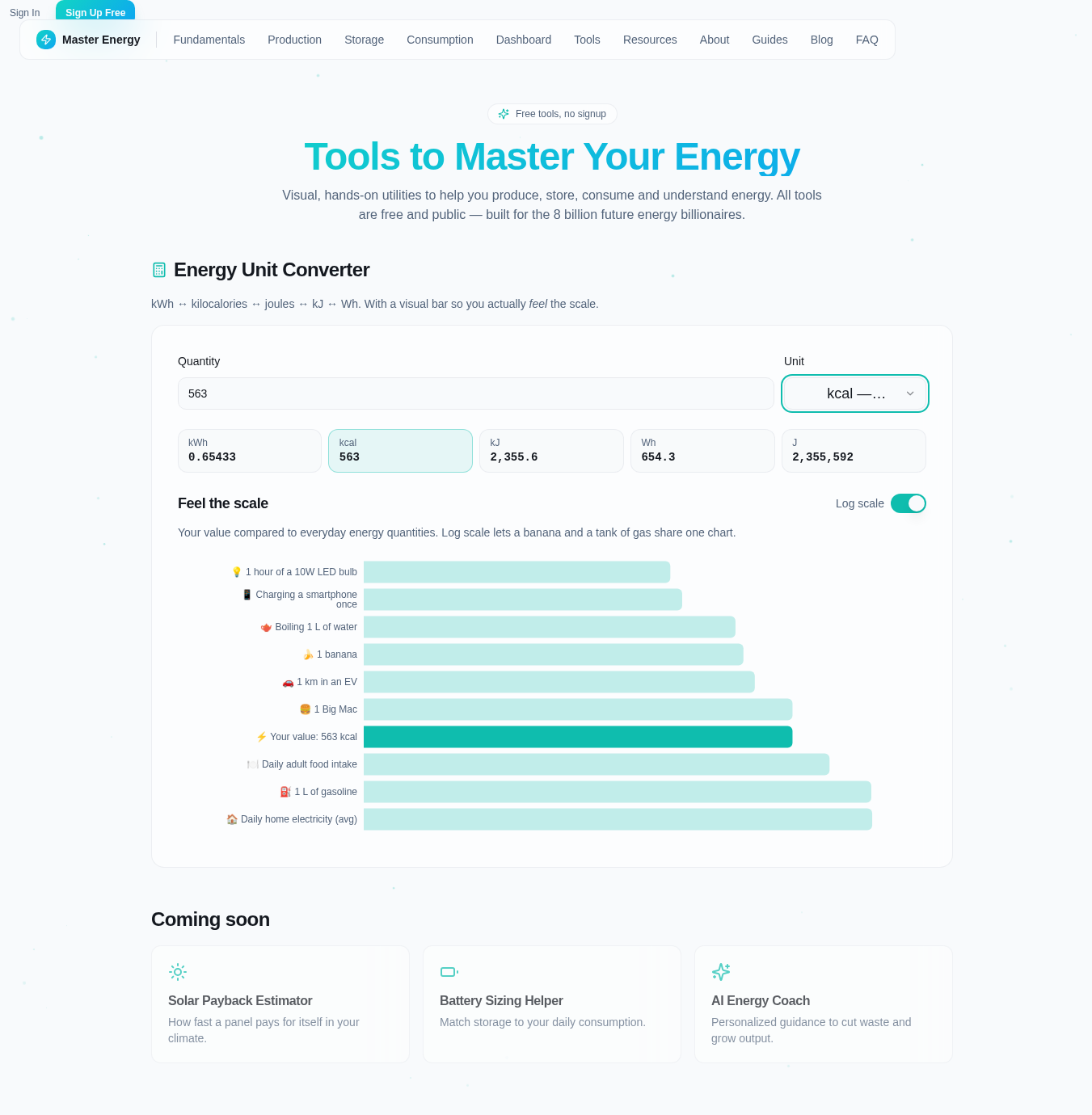
A few comparisons that hit hard once you actually see them:
- A Big Mac ≈ charging your phone roughly 150 times. Your lunch is a power bank.
- 1 litre of gasoline ≈ a full day of human food. Gas is preposterously dense, which is why we built civilization around it — and why moving off it is hard.
- A gas car wastes about 75% of that litre as heat. Your legs are actually more efficient than your engine, just slower. EVs flip the script — they put 80%+ of the kWh onto the road.
- A marathon runner burns ~3 kWh over the race. That's about 8 hours of running your fridge.
- 1 kWh from your roof solar ≈ 8 Big Macs of energy. A sunny afternoon feeds a small village, calorically speaking.
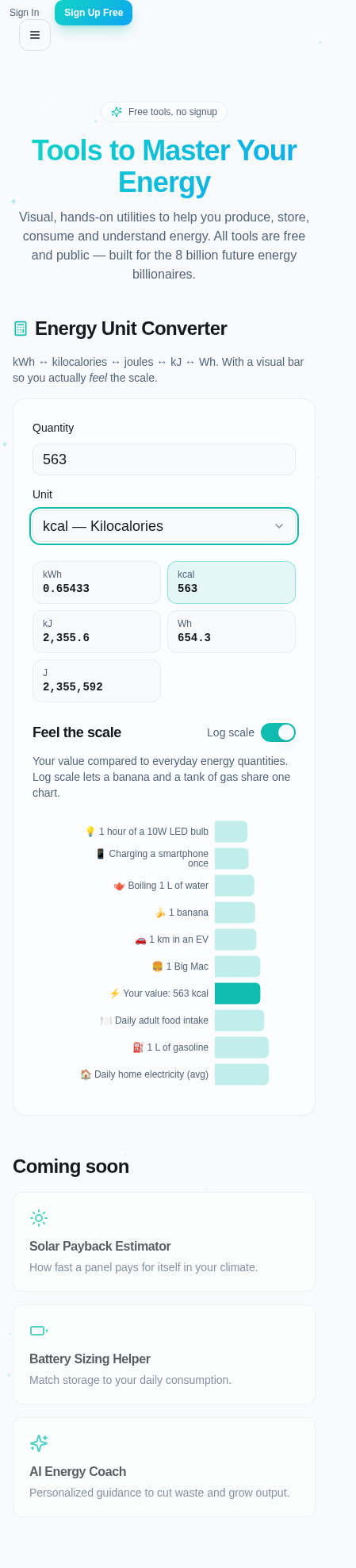
Try it yourself: masterenergy.online/tools
Try this today
A two-minute exercise that will rewire your gut feel for energy:
1. Pick something you did today — a coffee, ten flights of stairs, a 20-minute drive, an hour of laptop work. 2. Estimate the joules. Stairs: roughly body weight × height climbed × 10. So a 70 kg person up 30 m is ≈ 21,000 J ≈ 5 kcal of mechanical work (and ~20 kcal actually burned). 3. Open the converter, drop the number in, and see it next to a banana and a phone charge.
Do this three times this week and your brain quietly stops treating "kWh" as a number on a bill — it becomes a thing you can almost lift.
Why this matters for energy independence
Energy literacy is the foundation of energy independence. As long as your bill, your food, your car and your battery feel like four different problems, you'll outsource the thinking to whoever sells you the next thing.
But the moment you can mentally translate:
- a 5 kWh battery into "half a day of my house, or ~40 liters of gasoline equivalent,"
- a 400 kcal snack into "enough energy to drive my EV about 2.5 km,"
- a 10 kW solar inverter into "roughly a marathon's worth of human effort, every single hour of sunshine,"
…you stop being intimidated by solar quotes, battery datasheets, utility bills, and energy headlines. You start making decisions instead of accepting them.
That is the whole point of Master Energy — to help 8 billion humans become fluent in the one thing everything else is made of. The next great wave of democratization is energy, and it begins with a unit.
And speaking of units: your most durable form of stored energy is what's between your ears. Skills compound, never leak, and can never be inflated away. More on that in Durable Skills Are The Hard Currency.
TL;DR
- Energy is one thing, sold in five units.
- The joule is the universal ruler. 1 kWh ≈ 860 kcal.
- Power ≠ energy. Watts are speed; joules are distance. Efficiency is where the real losses hide.
- Conversion is forgettable; visual comparison rewires your intuition.
- We built a free, no-signup, no-paywall visual converter at masterenergy.online/tools — go feel a joule.
This week's challenge
Pick one line on your electricity bill and one meal from today. Convert both to joules in the converter, put them on the same chart, and screenshot it. That single image will teach you more about your energy life than any utility statement ever will.